Is your child 4 years old and always drawn to the water? Then our swim vest 4 years is the ideal choice. For this age the 3 to 6 years size is the right one: it covers 19 to 30 kg, so it fits comfortably now and has enough room to grow with your child until they are around 6. Four is often the age where swimming really starts, whether that is weekly lessons or simply practising with you in the shallow end. The foam spreads the buoyancy across the chest and back, which keeps your child upright and stable while their arms stay completely free for those first proper strokes. Looking for a different size? Explore our swim vests for every age:
Weight decides the size, not age. Nearly every four-year-old falls within the 19 to 30 kg range of the 3 to 6 years vest, which means one vest usually covers the whole period until your child swims independently. Is your child still under 19 kg? Then our swim vest 2 years in the 15 to 19 kg size fits better for the time being. Body shape counts as well: at the same weight, a child with a slimmer build may need a different size than a child with a broader build. Prefer a different kind of support? Some children practise more easily with their arms held up, which is what arm bands do, available from 15 to 30 kg for approximately 2 to 6 years. Our Swim Jumpers sit somewhere in between, combining arm bands with a chest piece across the same 15 to 30 kg range.
How the swim vest should fit
A good swim vest sits snugly without restricting your child. It should never feel tight, but it also should not be so loose that it rides up once your child gets into the water. A vest that shifts around is distracting exactly when your four-year-old is trying to concentrate on a new movement. Close the safety zip fully, fasten the safety strap between the legs, and check the fit before every water adventure. Do remember that a swim vest offers extra support but is not a life jacket. However confident your child looks, it never replaces swimming skills or adult supervision, so stay close and within arm's reach.
Get your swim vest 4 years at Swim Essentials
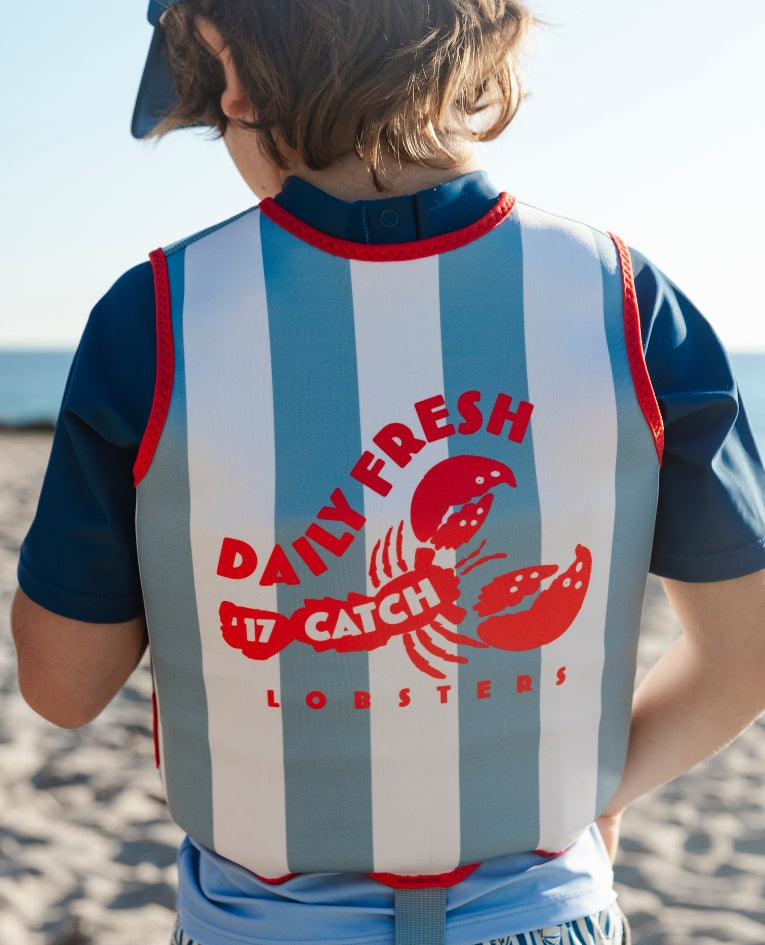
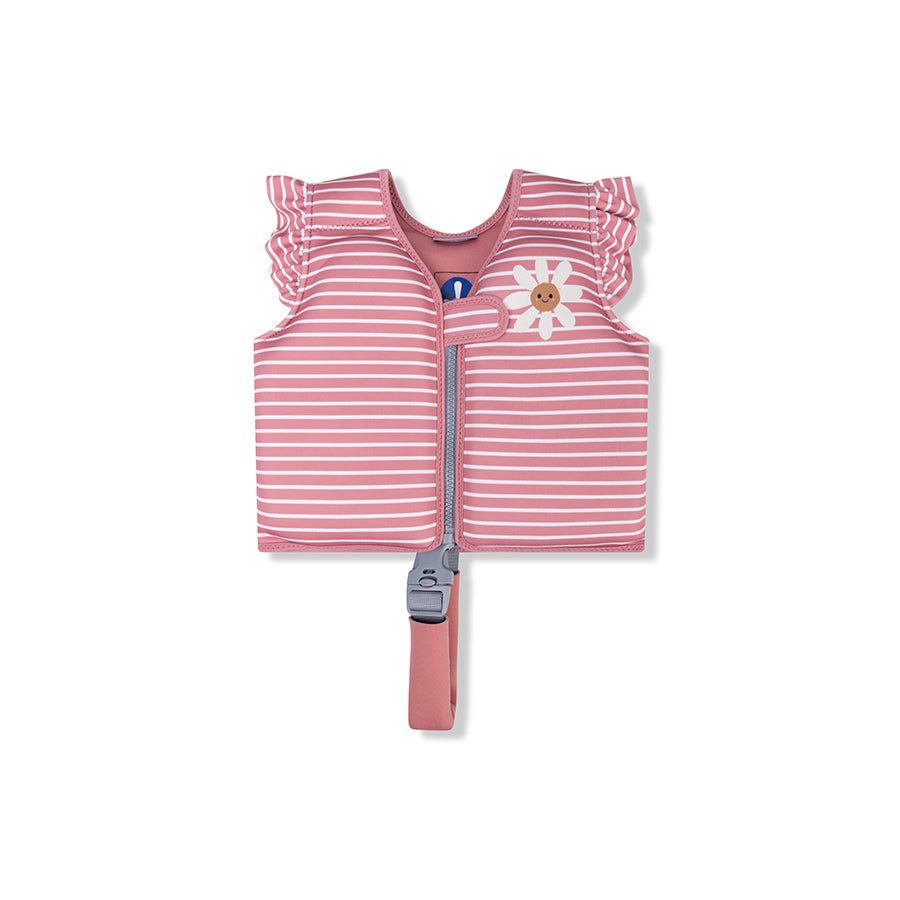
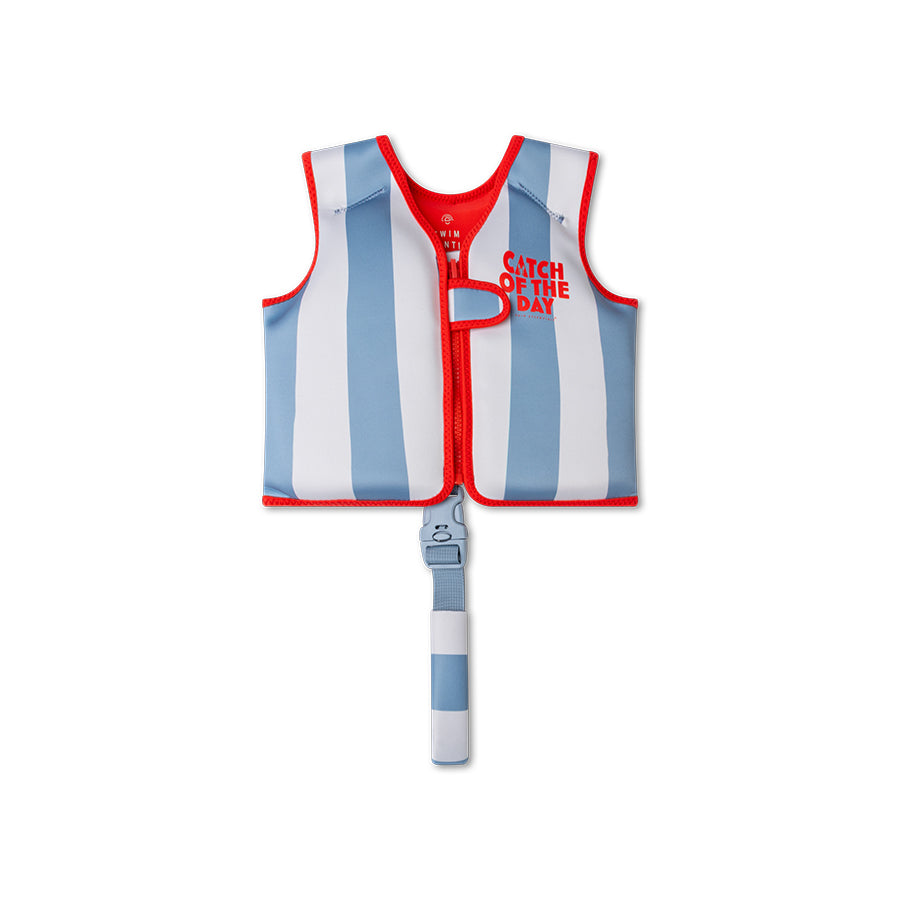
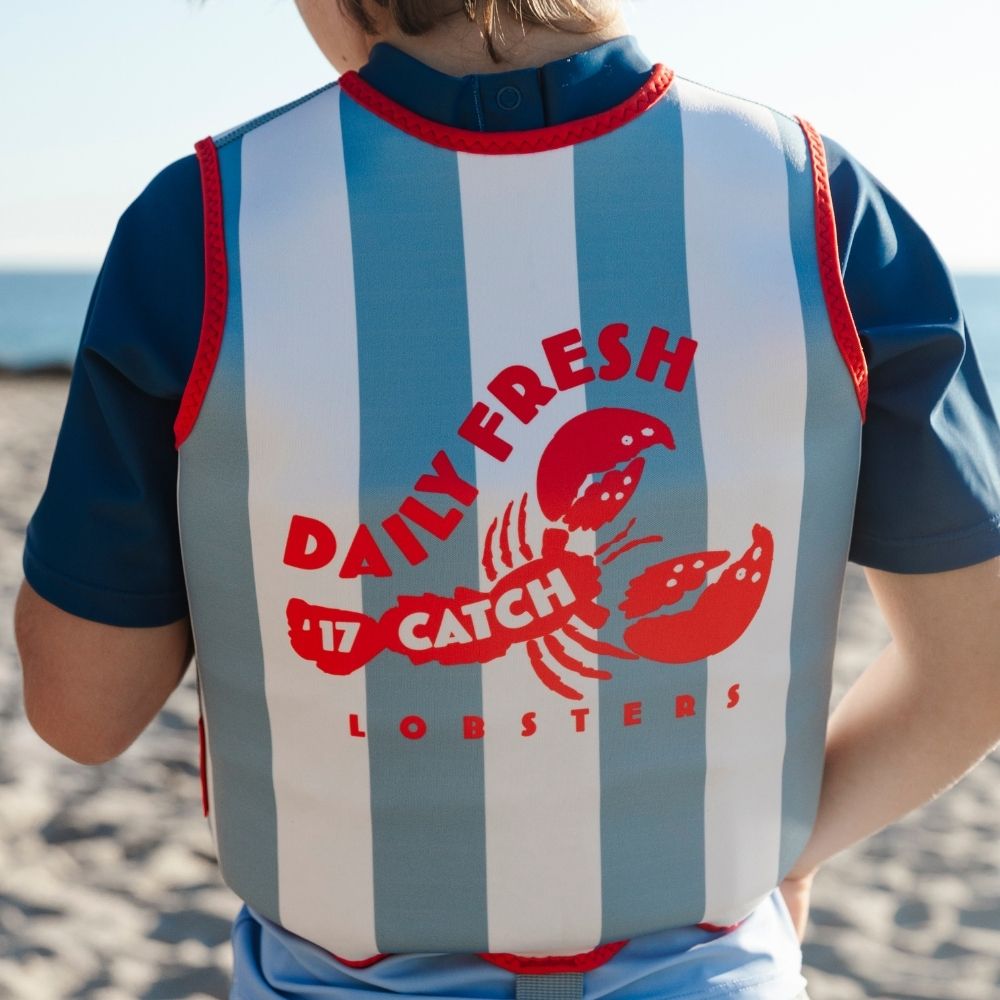
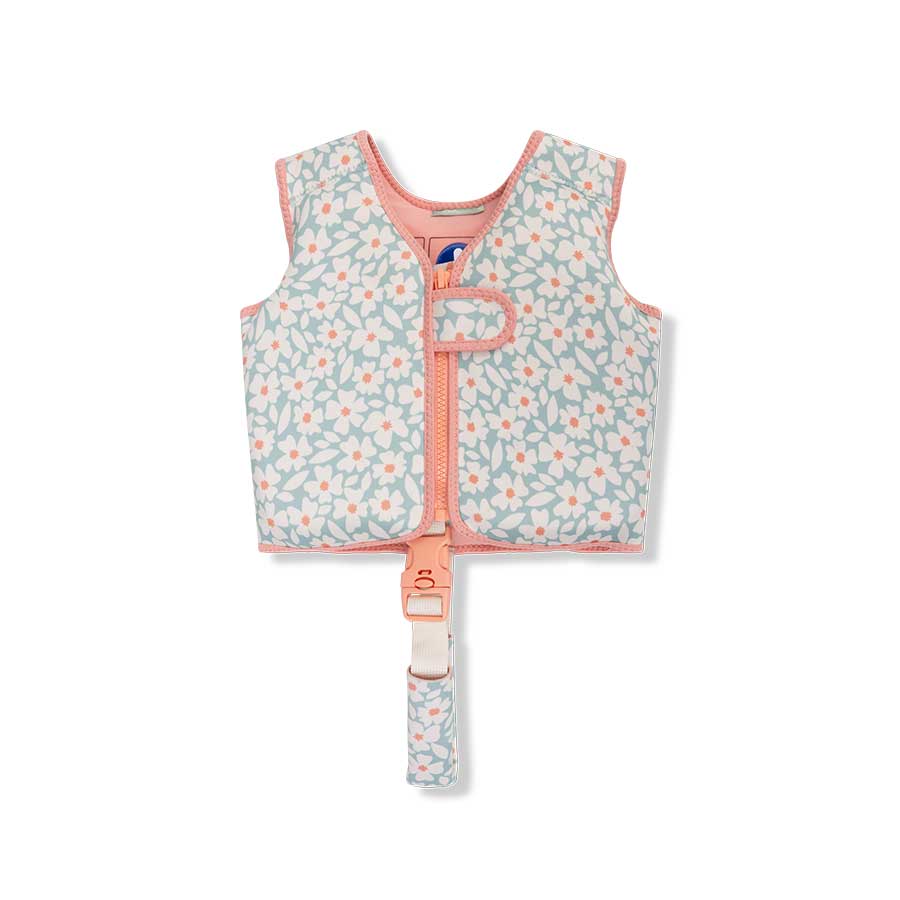
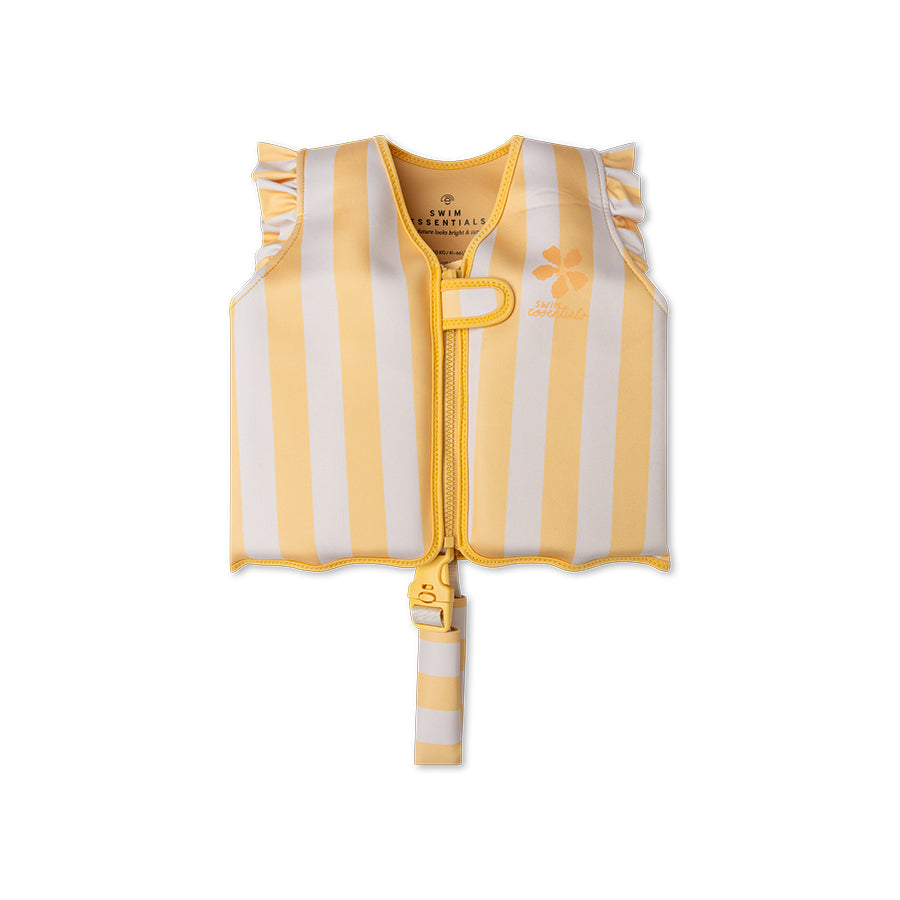
Our swim vest 4 years comes in cheerful colours and trendy prints, so there is always one that suits your child. Go for the red and white crabby, the red and blue catch of the day, the orange seastar or the multicolour summer fruits. Do you prefer flowers? The yellow flower market, the green florish, the red and white daisy flower and the orange and purple flower are lovely choices. For something bolder there is the orange and green vivid clash, the lila leopard and the multicolour abstract, and for a calmer look the brown and white softlines. Besides the design, we pay close attention to safety and comfort: the foam construction, the secure zip and the strap between the legs keep the vest in place while your child plays and practises.
At 4 years old, the size depends on weight. Does your child weigh less than 19 kg? Then the 2-3 years swim vest (15-19 kg) gives a snugger fit. From 19 kg, choose the 3-6 years size (19-30 kg). Weight matters more than age, and the vest should not ride up over the chin when your child is in the water.
Why does the same swim vest size fit two 4-year-olds differently?
Because body shape plays a role as well as weight. A child with a slimmer build may need a different size than a child with a broader build at the same weight. For a 4-year-old, the choice is usually between the swim vest 2-3 years (15 to 19 kg) and 3-6 years (19 to 30 kg). The vest should fit snugly, never pinch and not ride up in the water.
What size swim vest does my child need?
Choose by weight first, as age is only a guideline. Swim Essentials swim vests come in three sizes: 1-2 years (11-15 kg), 2-3 years (15-19 kg) and 3-6 years (19-30 kg). Body shape also plays a role. The vest should fit snugly and should not ride up over the chin when your child is in the water.
From what age can a child wear a swim vest?
Swim Essentials swim vests start at the 1-2 years size, for children weighing 11 to 15 kg. For younger babies, a baby float with a built-in seat is the usual choice. Whatever you choose, an adult should always stay within arm's reach, because a swim vest supports your child but does not replace supervision.
Is there a difference between a swim vest and a life vest?
Yes. A swim vest is a swimming aid: it helps your child float and move in the pool or at the beach, under supervision. A life vest or life jacket is a rescue device for boating and open water, usually with a collar that keeps the head above water. Swim Essentials swim vests are swimming aids, not life jackets.
Does a swim vest keep a child afloat?
A swim vest gives extra buoyancy: the foam helps keep your child's upper body at the surface while they kick and paddle. It does not guarantee that your child's face stays above the water, and it is no substitute for swimming skills. Your child still needs to move actively in the water, with an adult close by at all times.
Can my child learn to swim with a swim vest?
A swim vest can help your child practise their first strokes and gain confidence, because the arms stay free. Real swimming skills, however, are learned in swimming lessons. See the vest as support while playing and practising in the water, not as a way to learn to swim on its own.
Is a swim vest safe for children?
A swim vest helps your child float and gives support with the first swimming strokes, but it is not a life jacket and never replaces supervision. Our swim vest is made of foam, so it cannot deflate. It closes with a safety zip and a safety strap between the legs, so it does not ride up. Always stay within arm's reach of your child.
How many newtons should a child's swim vest have?
A newton rating mainly applies to life jackets and buoyancy aids for open water, such as when boating. For a swim vest your child plays in at the pool, you look at the weight class instead: it makes sure the buoyancy matches your child. Our swim vests come in 11 to 15 kg, 15 to 19 kg and 19 to 30 kg. For boating, choose a life jacket.
How do you put a swim vest on correctly?
Put the vest on, close the safety zip fully and fasten the safety strap between the legs. A good fit is snug while your child can still move and play freely. The vest should never feel too tight, but it should not be so loose that it rides up when your child gets into the water. Check the fit before every water adventure and always stay within arm's reach.